Advanced Therapeutic Support Surfaces for Pressure Ulcer Prevention and Treatment
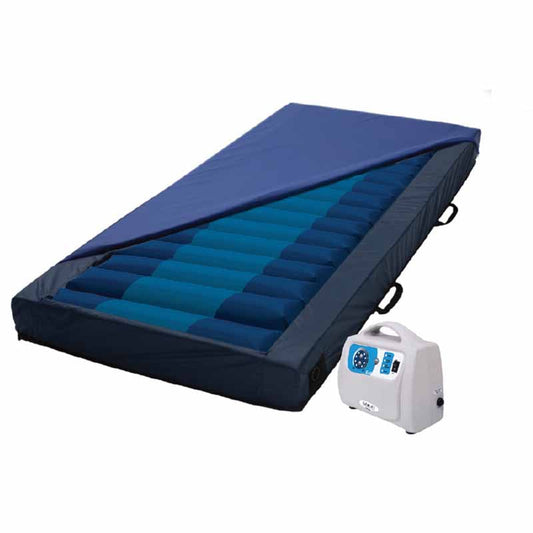
Medical air mattress systems provide dynamic pressure relief through controlled airflow, actively preventing and treating pressure ulcers (bedsores) in bedridden or immobile patients. Our collection includes alternating pressure, low air loss, and lateral rotation systems designed for both prevention and treatment of pressure injuries from Stage 1 through Stage 4.
Skip to Product List →
Understanding Pressure Ulcers and Prevention
Pressure ulcers, commonly called bedsores or pressure sores, develop when sustained pressure restricts blood flow to skin and underlying tissue. Areas over bony prominences like heels, hips, tailbone, and shoulder blades are most vulnerable. Without intervention, pressure ulcers progress through four stages:
Learn More: Read real-life stories of dealing with pressure ulcers
-
Stage 1: Non-blanchable redness of intact skin
-
Stage 2: Partial thickness skin loss with exposed dermis
-
Stage 3: Full thickness skin loss exposing subcutaneous tissue
-
Stage 4: Full thickness tissue loss exposing muscle, tendon, or bone
Medical air mattresses prevent pressure ulcer development by continuously redistributing pressure, promoting blood flow, and managing heat and moisture that contribute to skin breakdown.
How Medical Air Mattresses Work
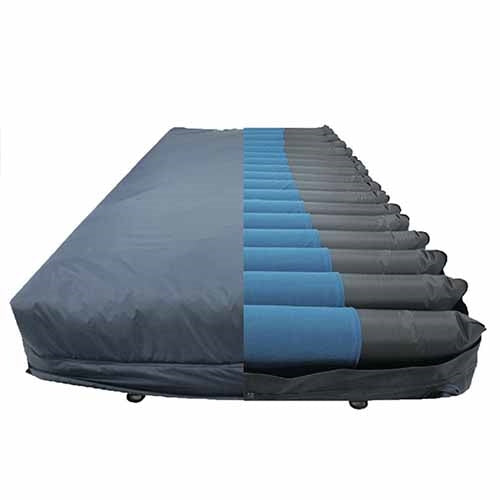
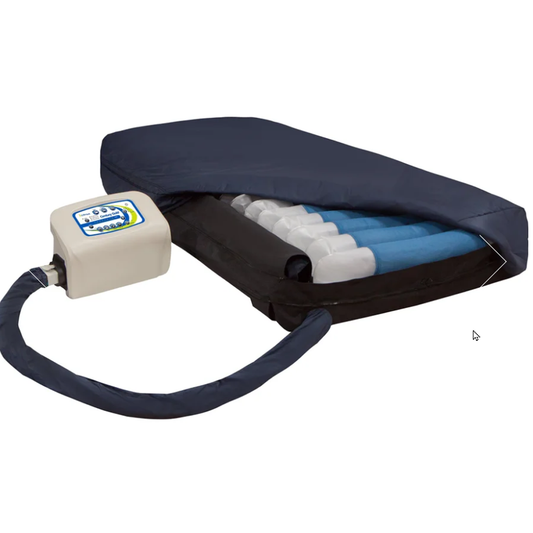
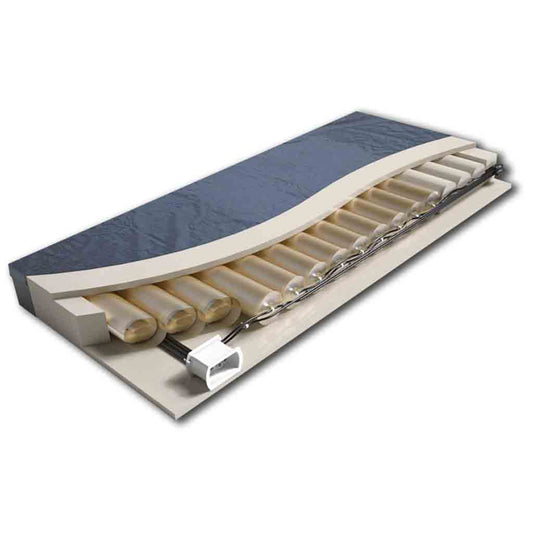
Unlike static foam mattresses that provide passive support, medical air mattresses actively manage pressure through sophisticated air cell systems controlled by electric pumps. The pump continuously adjusts air pressure within individual cells based on patient weight, position, and therapeutic needs.
Want to Learn More? Read about how therapeutic support surfaces prevent and treat pressure ulcers
Dynamic Pressure Redistribution
Air mattresses distribute patient weight across a larger surface area than traditional mattresses, reducing pressure at any single point. Peak pressure levels decrease from 150+ mmHg on standard mattresses to 20-32 mmHg on quality air systems, well below the 32 mmHg capillary closing pressure that restricts blood flow.
Active Therapy vs. Passive Support
The key advantage of air mattresses over foam is active therapy. Air systems continuously adjust throughout the day and night, responding to patient movement and position changes. This dynamic adjustment prevents pressure buildup that occurs with static surfaces.
Types of Medical Air Mattress Systems
Alternating Pressure Mattresses
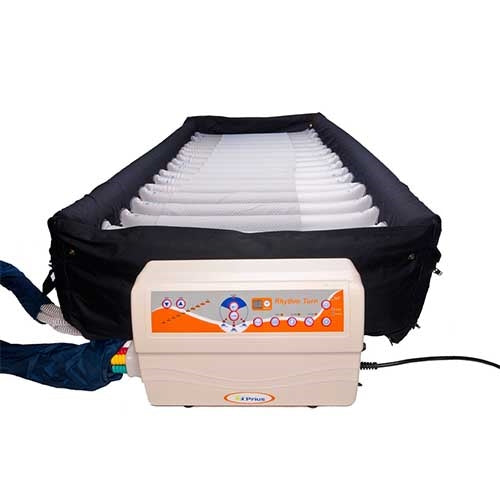
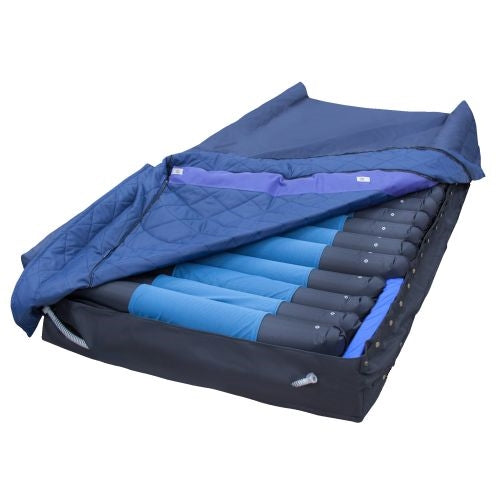
Alternating pressure systems contain rows of air cells that inflate and deflate in cycles, typically over 10-20 minute intervals. As one set of cells inflates, the adjacent set deflates, continuously shifting pressure points and encouraging blood flow to all areas.
How It Works: Half the air cells support the patient while the other half deflate completely, allowing unrestricted blood flow to those contact areas. The cycle then reverses, inflating the previously deflated cells and deflating the others.
Best For: Prevention and treatment of pressure ulcers Stages 1-4, post-surgical patients, long-term bedridden individuals, and patients at high risk for skin breakdown.
Advantages: Proven effectiveness, lower cost than advanced systems, works for most pressure ulcer prevention needs, and relatively simple operation.
Low Air Loss Mattresses
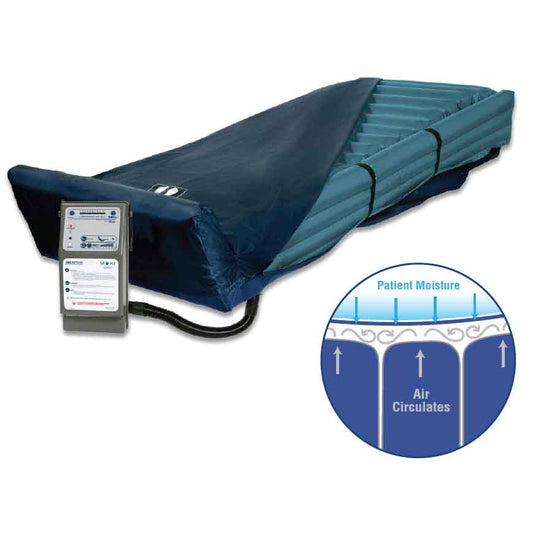
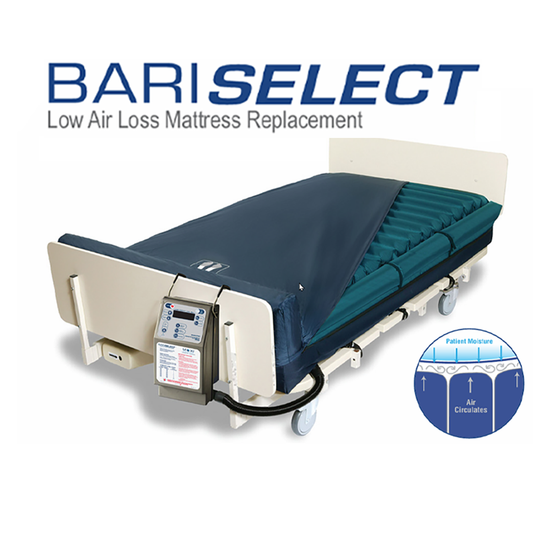
Low air loss systems continuously circulate air through the mattress surface via hundreds of small laser-cut holes in the cover material. This constant airflow manages heat and moisture, keeping skin cool and dry while providing pressure relief.
How It Works: Multiple independent air chambers maintain optimal pressure distribution while air circulates through micropores in the cover. The "air loss" refers to this controlled escape of air through the cover, which carries away heat and moisture.
Best For: Patients with existing pressure ulcers Stages 2-4, moisture-related skin issues, heavy perspiration, incontinence management, and patients requiring extended bed rest.
Advantages: Superior microclimate management, keeps skin significantly drier than alternating pressure alone, reduces maceration risk, and often includes alternating pressure function.
Lateral Rotation Therapy
Lateral rotation mattresses slowly and continuously turn the patient from side to side, typically rotating 30-40 degrees. This automated repositioning prevents pressure buildup, mobilizes pulmonary secretions, and improves oxygenation.
How It Works: Air cells on alternating sides of the mattress inflate and deflate in coordinated patterns, gently rolling the patient from one side to the other over 3-5 minute cycles. The rotation continues 24 hours daily unless paused for care activities.
Best For: ICU patients, ventilator-dependent individuals, pulmonary conditions requiring postural drainage, patients who cannot be manually repositioned, and prevention of ventilator-associated pneumonia.
Advantages: Eliminates need for manual turning every 2 hours, improves respiratory function, superior pressure ulcer prevention, and reduces caregiver physical strain.
Combination Systems (Hybrid Therapy)
Advanced systems combine multiple technologies: alternating pressure plus low air loss, or alternating pressure plus lateral rotation. These premium mattresses provide comprehensive therapy addressing multiple risk factors simultaneously.
Best For: Complex medical cases, ICU and critical care, bariatric patients, severe pressure ulcer treatment, and situations requiring maximum therapeutic intervention.
Key Features to Consider
Weight Capacity
Standard medical air mattresses accommodate 300-350 pounds. Bariatric models support 500-1000 pounds. Always select a mattress rated for at least 50 pounds above patient weight to ensure proper function and safety.
Cell-on-Cell vs. Replacement Systems
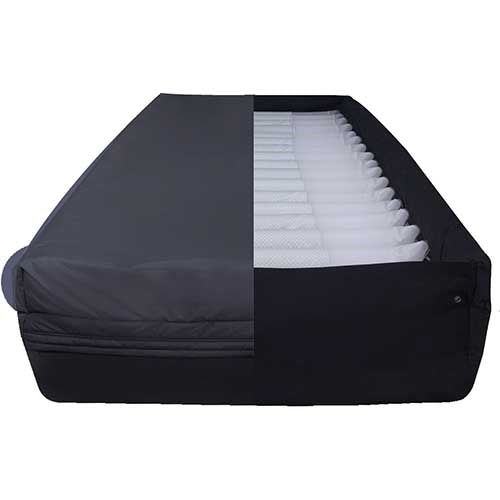
Overlay Systems (Cell-on-Cell): Place on top of existing hospital bed mattress. Less expensive, portable between beds, easier storage. Effective for prevention and Stage 1-2 treatment. Limited effectiveness for advanced ulcers.
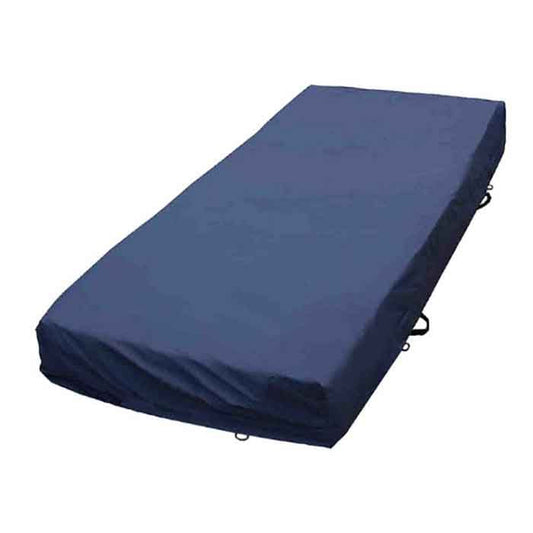
Replacement Systems: Complete mattress replacement, typically 8-10 inches thick. Superior support and therapeutic capability. Better for treatment of Stage 3-4 ulcers. Required for bariatric patients and long-term care.
Pump Features
Auto Weight Sensing: Pump automatically detects patient weight and adjusts pressure accordingly, eliminating manual calibration.
Alarm Systems: Alerts for low pressure, power loss, or system malfunction ensure continuous therapy.
Noise Level: Quality pumps operate at 25-35 dB, quieter than conversation. Budget models may exceed 40 dB, potentially disturbing sleep.
Static Mode: Ability to inflate all cells simultaneously for transfers, procedures, or CPR.
Cover Materials
Waterproof/Fluid-Proof: Essential for incontinence management and infection control. Look for welded seams rather than stitched seams which can leak.
Anti-Microbial: Silver or copper-infused covers inhibit bacterial growth and reduce odor.
Low-Friction: Reduces shear forces during repositioning, protecting fragile skin.
Vapor Permeable: Allows moisture vapor to escape while blocking fluids, managing microclimate more effectively.
Choosing the Right Air Mattress System
For Prevention (No Current Pressure Ulcers)
Recommend: Alternating pressure overlay or basic alternating pressure replacement mattress. Cost-effective prevention for at-risk patients. Adequate for most home care situations.
For Stage 1-2 Pressure Ulcers
Recommend: Alternating pressure replacement mattress with low air loss feature. Active pressure relief promotes healing while moisture management prevents deterioration.
For Stage 3-4 Pressure Ulcers
Recommend: Low air loss replacement system or combination therapy mattress. Advanced wound care requires maximum pressure redistribution and optimal microclimate control.
For Bariatric Patients (Over 350 lbs)
Recommend: Bariatric-rated low air loss or alternating pressure system. Standard mattresses cannot adequately redistribute pressure for heavier patients. Bariatric systems feature reinforced construction and wider dimensions.
For ICU/Critical Care
Recommend: Lateral rotation therapy or advanced combination system. Complex medical needs require comprehensive therapeutic capabilities including pulmonary support and complete pressure management.
Medical Air Mattress Benefits
Explore More: Discover the complete benefits of medical air mattress systems
Clinical Benefits
- Prevents 60-80% of pressure ulcers in at-risk patients
- Accelerates healing of existing pressure injuries
- Reduces need for manual repositioning every 2 hours
- Improves circulation and tissue oxygenation
- Manages heat and moisture that contribute to skin breakdown
- Reduces pain associated with pressure points
Caregiver Benefits
- Reduces physical strain from frequent repositioning
- Decreases time spent on preventive care activities
- Lowers overall cost of care by preventing expensive wound treatment
- Provides peace of mind through continuous automated therapy
- Allows single caregiver management in home settings
Patient Benefits
- Improved comfort compared to standard mattresses
- Better sleep quality with reduced need for repositioning
- Maintained dignity through reduced handling
- Faster healing and shorter recovery periods
- Reduced pain from pressure points and turning
Common Applications
Post-Surgical Recovery
Surgery patients face elevated pressure ulcer risk due to immobility, anesthesia effects reducing circulation, and surgical positioning. Air mattresses provide crucial prevention during the vulnerable recovery period.
Spinal Cord Injury
Paralyzed patients cannot reposition independently and lack sensation to detect pressure buildup. Lifelong pressure ulcer prevention requires quality support surfaces. Air mattresses are standard care for this population.
Long-Term Care Facilities
Nursing home residents often have multiple risk factors: advanced age, limited mobility, poor nutrition, and thin skin. Air mattresses reduce facility liability while improving resident outcomes and comfort.
Home Hospice Care
End-of-life patients deserve comfort and dignity. Air mattresses prevent painful pressure ulcers while reducing caregiver burden during an emotionally difficult time. Many hospice programs provide air mattresses as standard equipment.
Obesity and Bariatric Care
Bariatric patients face exponentially higher pressure ulcer risk due to increased weight, reduced mobility, moisture issues, and difficulty with repositioning. Bariatric air mattresses are essential, not optional, for patients over 350 pounds.
Setup and Maintenance
Initial Setup
Most air mattresses require minimal assembly. Place mattress on bed frame, connect pump, plug in power, and allow 15-20 minutes for initial inflation. Follow manufacturer instructions for any patient weight adjustments.
Daily Care
- Inspect mattress surface for damage or leaks
- Clean spills immediately with mild disinfectant
- Check pump connections and power supply
- Verify alarm systems are functional
- Monitor inflation level during patient transfers
Deep Cleaning
Clean mattress covers with hospital-grade disinfectants following manufacturer guidelines. Most covers can be wiped down while inflated. Some removable covers are machine washable. Never submerge the pump or electrical components.
Troubleshooting Common Issues
Mattress Losing Air: Check all connections, inspect for punctures, verify pump is operating. Small leaks can often be repaired with patch kits.
Excessive Noise: Ensure pump is on stable surface, check for loose connections, verify pump intake isn't obstructed.
Inadequate Support: Confirm weight settings are correct, check for leaks, ensure pump capacity matches mattress requirements.
Safety Considerations
-
Power Backup: Most pumps include battery backup or manual CPR deflation. Know emergency procedures.
-
Side Rails: Use appropriate bed rails as air mattresses can increase fall risk during transfers.
-
Transfer Assistance: Air surfaces are less stable than firm mattresses. Use static mode or extra caution during transfers.
-
Skin Monitoring: Air mattresses prevent most ulcers but aren't foolproof. Continue regular skin inspections.
-
Weight Limits: Never exceed manufacturer weight ratings. Overloading compromises effectiveness and safety.
Insurance and Medicare Coverage
Medicare Part B may cover air mattresses when medically necessary and prescribed by a physician. Coverage typically requires:
- Physician prescription stating medical necessity
- Documentation of pressure ulcer (Stage 2 or higher) or high risk factors
- Previous trial of conservative measures (repositioning, standard foam)
- Expected duration of need (typically 3+ months for purchase)
Medicare usually covers rental for shorter-term needs or purchase for long-term requirements. Coverage policies vary by region and insurance plan. Contact your insurance provider for specific coverage details. We can provide documentation to support insurance claims.
Cost Considerations
Purchase vs. Rental
Purchase: Cost-effective for long-term needs (6+ months). Ownership provides flexibility and eliminates ongoing rental fees. Typical purchase prices range from $800-$3,500 depending on features.
Rental: Better for short-term recovery (post-surgery, temporary immobility). Monthly rental fees typically $150-$400. Insurance may cover rentals more readily than purchase.
Total Cost of Ownership
Consider ongoing costs beyond initial purchase: replacement covers ($150-$400), pump repairs or replacement ($200-$500), and electricity (typically $5-15/month). Quality systems often prove less expensive long-term due to durability and lower maintenance needs.
Warranty and Support
Medical air mattress warranties typically include:
-
Pump: 2-3 years on motor and electronics
-
Mattress: 1-2 years on air cells and construction
-
Cover: 90 days to 1 year depending on manufacturer
Extended warranties may be available for purchase. Maintain all documentation for warranty claims.
Popular Brands We Carry
Prius Medical
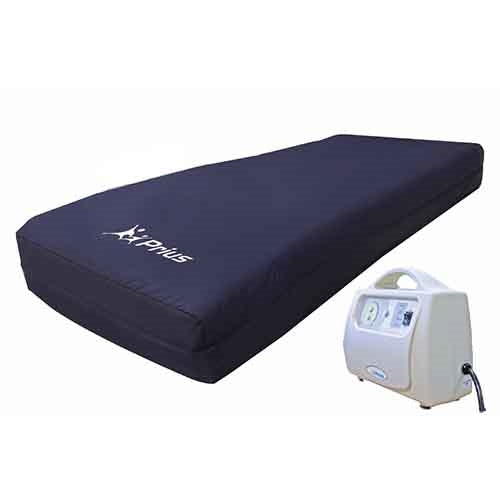
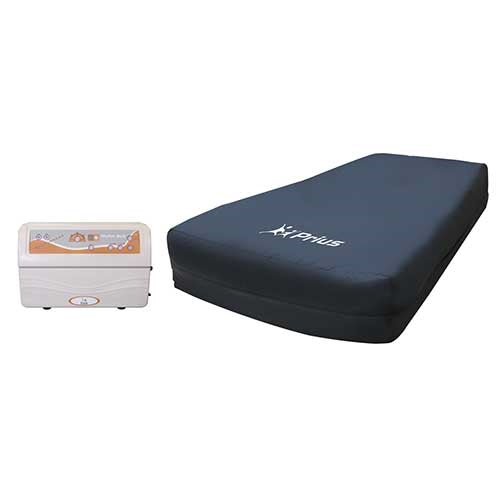
Value-focused air mattresses offering reliable performance at accessible prices. The Prius UTS and similar models provide excellent alternating pressure therapy for prevention and treatment of pressure ulcers Stages 1-4.
Drive Medical
Comprehensive range from basic alternating pressure to advanced low air loss systems. Known for durability and user-friendly controls. Popular in both home care and facility settings.
Invacare
Premium therapeutic mattresses with advanced features. microAIR and similar lines offer sophisticated pressure management for complex medical needs and bariatric applications.
Free Shipping & Expert Consultation
All medical air mattress systems ship free within the continental United States. Most models ship within 1-2 business days. Our medical equipment specialists understand pressure ulcer prevention and treatment and can help you select the appropriate system based on patient diagnosis, stage of pressure injury, weight, and care environment.
Call 800-998-4703 Monday through Friday, 7am-5pm EST to discuss your therapeutic surface needs.
Questions about which system is right for your situation? We can discuss current pressure ulcer status, patient mobility level, weight capacity requirements, care setting (home vs. facility), and budget to recommend the most appropriate mattress type and features. Whether you need basic prevention or advanced wound care, we'll help you understand the options and make an informed decision.
Need help with insurance coverage? We can provide documentation and guidance for Medicare or private insurance claims. Let us know what information your provider requires, and we'll assist with the approval process.
parts: