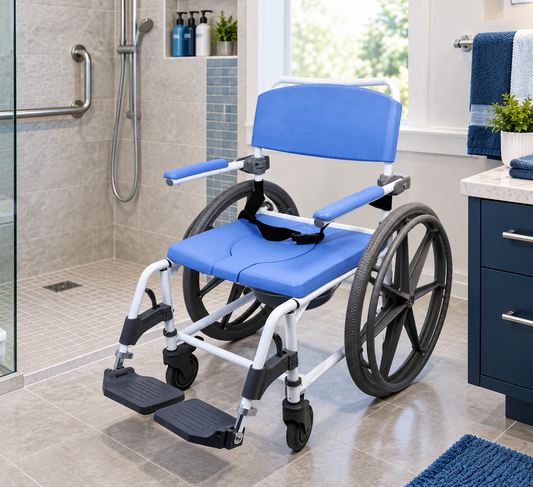
Rolling Rehab Chairs for Independence in Bathing and Toileting
Shower commode chairs, often called rehab chairs, combine the functions of a shower chair, commode, and wheelchair into one versatile mobility aid. These specialized chairs roll over standard toilets and directly into showers, allowing users to maintain dignity and independence during personal care while reducing caregiver strain and transfer frequency.
Skip to Product List →
What Makes Shower Commode Chairs Unique?
Unlike standard shower chairs or portable commodes, shower commode chairs offer complete bathroom mobility:
-
Multi-Functional Design: One chair serves as shower seat, toilet transfer aid, and bathroom wheelchair
-
Rust-Resistant Construction: PVC, aluminum, or coated steel withstands constant water exposure
-
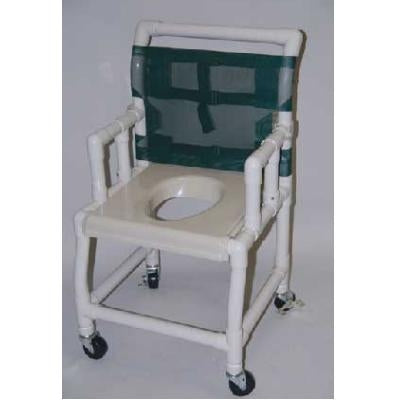
Open-Bottom Seat: Allows positioning directly over toilets and facilitates hygiene care
-
Rolling Mobility: Large wheels or casters enable movement throughout the bathroom
-
Water-Safe Materials: All components designed for wet environments
How Shower Commode Chairs Work
The typical bathroom routine with a shower commode chair:
- Transfer patient from bed or wheelchair to shower commode chair
- Roll chair directly over toilet for toileting needs
- Roll chair into shower stall or over tub for bathing
- After bathing, return to toilet if needed or transfer back to bed/wheelchair
This process eliminates multiple transfers, reduces fall risk, and allows one caregiver to safely assist with complete bathroom care. For independent users, the chair provides support and stability throughout all bathroom activities.
Key Benefits
Reduces Transfer Frequency
Traditional bathroom routines require multiple transfers: wheelchair to toilet, toilet to shower chair, shower chair to toweling area, and back to wheelchair. Each transfer presents fall risk and physical strain. Shower commode chairs reduce this to just two transfers: into the chair and back out.
Maintains Dignity and Independence
Users who can self-propel gain significant independence in bathroom activities. Privacy is maintained as caregivers need only assist with tasks requiring help, not constant transfers and repositioning.
Reduces Caregiver Physical Strain
Eliminating multiple transfers dramatically reduces lifting and physical effort required from caregivers. Rolling the occupied chair is far easier than lifting or supporting during multiple position changes.
Improves Safety
Fewer transfers mean fewer opportunities for falls. The chair provides stable seating throughout all bathroom activities, with arms and footrests preventing slips or slides.
Saves Time
Bathroom routines that might take 45-60 minutes with multiple transfers can be completed in 20-30 minutes using a shower commode chair. This efficiency benefits both caregivers and users.
Types of Shower Commode Chairs
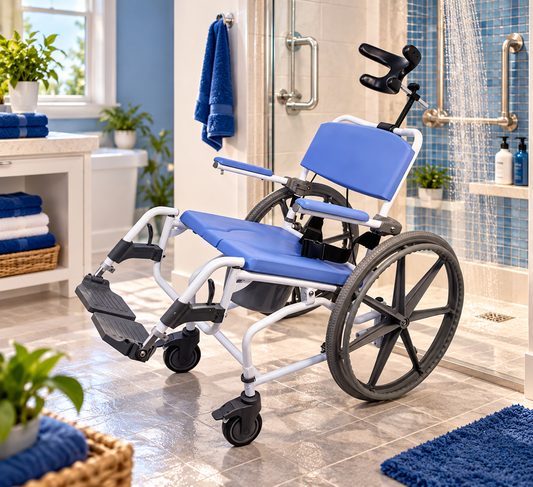
Self-Propel Models (24" Rear Wheels)
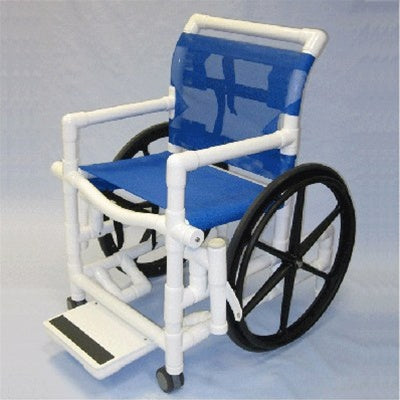
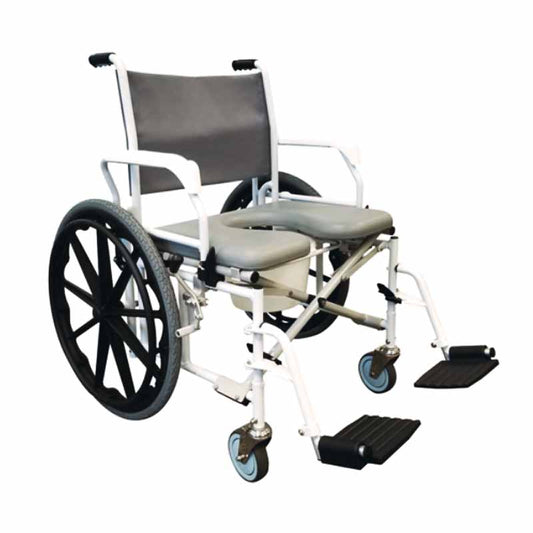
Large rear wheels with hand rims allow independent users to propel themselves. These chairs function like wheelchairs, giving users control over their movement throughout the bathroom. Ideal for individuals with upper body strength who want maximum independence despite lower body limitations.
Best For: Users with paraplegia, lower limb amputations, or conditions affecting legs but not arms
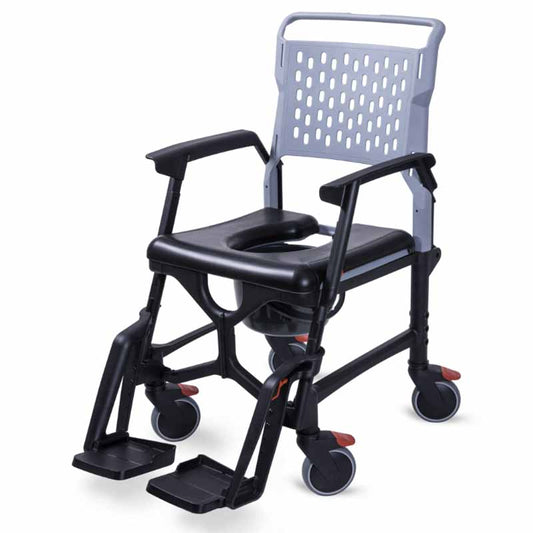
Attendant-Propelled Models (Small Casters)
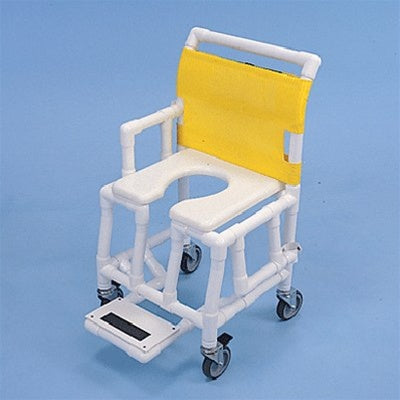
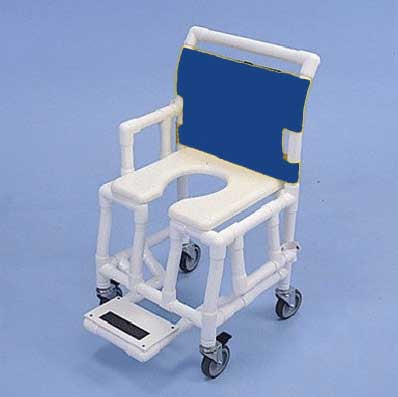
Four small caster wheels require a caregiver to push. These models are more compact, easier to maneuver in tight bathrooms, and better for users who cannot self-propel. The smaller wheelbase often fits through narrower doorways and into smaller shower stalls.
Best For: Users with limited upper body strength, cognitive impairment, or requiring full assistance
Tilt Models
The entire seat tilts backward while maintaining the seat-to-back angle. Tilting relieves pressure, assists with positioning, makes transfers easier, and helps users who slide forward in chairs. Tilt function is operated by caregivers using a release lever or handle.
Best For: Users with poor trunk control, at risk for sliding, or requiring pressure relief
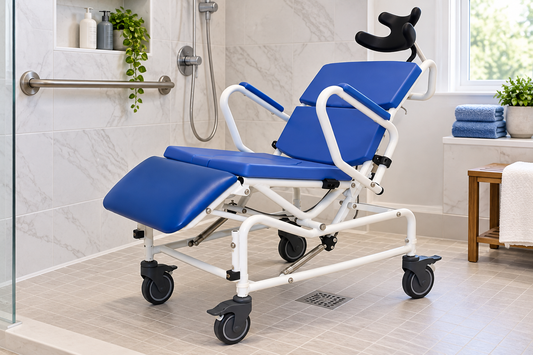
Tilt-and-Recline Models
Combines tilt functionality with an adjustable backrest that reclines. This allows positioning from fully upright to nearly horizontal. Advanced models offer hair washing positions, improved comfort for extended bathing, easier caregiver access for hygiene care, and better positioning for users who cannot sit upright.
Best For: Users requiring maximum positioning flexibility, extensive care needs, or limited sitting tolerance
Bariatric Models
Reinforced construction with wider seats (typically 24-28 inches) and higher weight capacities (up to 600 pounds or more). Heavy-duty frames, reinforced seat platforms, wider base for stability, and larger caster or wheel assemblies ensure safe use for larger individuals.
Best For: Users over 300 pounds or requiring extra-wide seating
Essential Features to Consider
Seat Width and Toilet Clearance
Standard toilet bowls measure approximately 14 inches wide. Chair frames must be narrow enough to roll over the toilet:
-
18" Seat Width: Fits over most standard toilets, works in tighter bathrooms
-
20-22" Seat Width: More comfortable for larger users, may not fit over narrow toilets
-
24"+ Seat Width (Bariatric): Requires elongated or oversized toilet bowls
Measure your toilet: Measure from inside frame edge to edge to ensure the chair will fit properly over your toilet.
Armrests
Armrest style significantly affects transfers:
-
Fixed Arms: Most stable, best for weight-bearing during transfers, less expensive
-
Flip-Up Arms: Allow side transfers from wheelchair or bed, essential for users who cannot stand
-
Removable Arms: Complete removal for some transfer situations
-
Padded Arms: Extra comfort for users who lean on arms frequently
Footrests
Footrests support legs and improve positioning:
-
Swing-Away Footrests: Move to the side for easier transfers and toilet access
-
Removable Footrests: Can be taken off completely when not needed
-
Elevating Leg Rests: Raise legs for circulation, edema management, or comfort
-
One-Piece Footrest: Single platform rather than individual foot supports
Seat Type
Horseshoe/U-Cut Seats: Traditional open-front design allows easy access for hygiene care. The U-shaped opening provides caregiver access while maintaining support.
Full Seats with Removable Inserts: Padded seat with removable center section. Insert can be removed for toileting, replaced for comfort during transfers or non-bathroom use.
Padded vs. Solid Seats: Padded seats offer more comfort for extended sitting. Solid seats are easier to clean and dry faster but may be less comfortable.
Brakes and Wheels
Wheel Locks: Essential for safety during transfers. Look for easy-to-operate locks that fully immobilize wheels.
Wheel Size: Larger wheels roll more easily over thresholds and bathroom obstacles. Smaller casters are more maneuverable in tight spaces.
Wheel Material: Solid wheels require no maintenance but provide a firmer ride. Pneumatic (air-filled) offer smoother rolling but need occasional inflation.
Common Applications
Post-Surgical Recovery
Hip or knee replacement patients, spinal surgery recovery, or any situation requiring non-weight-bearing on lower extremities. The chair allows safe bathroom access during the critical recovery period when falls are most dangerous.
Progressive Neurological Conditions
Multiple sclerosis, Parkinson's disease, ALS, or other conditions causing progressive mobility loss. As conditions advance, the chair adapts with tilt and recline options.
Spinal Cord Injuries
Paraplegia or conditions affecting lower body function while upper body remains strong. Self-propel models provide independence in bathroom activities.
Stroke Recovery
One-sided weakness makes traditional bathroom transfers difficult and dangerous. The chair provides stability and support during the recovery and rehabilitation process.
Bariatric Care
Safe bathroom transfers for individuals over 300 pounds. Standard shower chairs and portable commodes often lack the weight capacity and stability needed for larger users.
Long-Term Care Facilities
Nursing homes and assisted living facilities use shower commode chairs to efficiently provide bathroom care while maintaining resident dignity and reducing staff injury rates.
Choosing Between Self-Propel and Attendant Models
Choose Self-Propel (24" wheels) if:
- User has good upper body strength and coordination
- User wants to maintain bathroom independence
- Cognitive function allows safe self-propulsion
- Bathroom doorways accommodate wider wheelbase (typically 26-28 inches)
- User has experience with wheelchairs or can learn to propel safely
Choose Attendant-Propelled (casters) if:
- User cannot safely self-propel
- Upper body weakness limits propulsion ability
- Cognitive issues prevent safe independent use
- Bathroom space is very limited
- Caregiver will always be present for bathroom activities
Sizing and Fit
Measure Your User
-
Hip Width: Measure widest point while seated, add 2 inches for comfort
-
Seat Depth: Measure from back of buttocks to back of knee, subtract 2-3 inches
-
Seat Height: Measure from floor to back of knee while seated (important for transfers)
-
Weight: Ensure chair capacity exceeds user weight by at least 50 pounds
Measure Your Bathroom
-
Doorways: Measure narrowest passage to bathroom
-
Shower Opening: If using a shower stall, measure entry width
-
Toilet Width: Measure distance between toilet frame edges
-
Turning Space: Consider whether chair can maneuver in available space
Care and Maintenance
Cleaning
After each use, rinse with fresh water to remove soap and shampoo residue. Clean with mild disinfectant or soapy water weekly. Avoid harsh chemicals that can degrade plastic or rubber components. Dry thoroughly, especially upholstered components.
Inspection
Regularly check:
- Wheel locks for proper engagement
- Seat integrity (no cracks or weak points)
- Wheels for smooth rolling and wear
- Frame connections and hardware tightness
- Upholstery for tears or deterioration
Storage
Store in a dry area when not in use. If storing in bathroom, ensure good ventilation to prevent mold or mildew. Keep brakes unlocked during storage to prevent brake mechanism fatigue.
Safety Guidelines
-
Always Lock Wheels: Engage both wheel locks before transfers
-
Use Non-Slip Mats: Place mats under chair wheels on smooth floors
-
Check Weight Limits: Never exceed manufacturer's stated capacity
-
Supervise Initially: Attend first several uses until user demonstrates safe operation
-
Clear Path: Remove bathroom obstacles before moving occupied chair
-
Proper Transfers: Train caregivers in safe transfer techniques
Accessories and Add-Ons
-
Commode Pails: For use when toilet access isn't available
-
Seat Cushions: Extra padding for comfort during extended use
-
Headrests: Support for users with limited head control
-
Seat Belts: Safety positioning for users at risk of sliding
-
Leg Strap Extensions: Additional height for taller users
-
Replacement Parts: Wheels, armrests, footrests available separately
What's Included
Most shower commode chairs include:
- Complete chair with frame, seat, arms, and wheels/casters
- Footrests (swing-away or fixed depending on model)
- Wheel locks on rear wheels or select casters
- Assembly tools and instructions
- User manual with weight capacity and care guidelines
Some models may require minor assembly. Most can be assembled in 20-30 minutes with basic tools.
Warranty Information
Shower commode chair warranties typically include:
-
Frame: 1-5 years depending on manufacturer and model
-
Components: 1-2 years on moving parts (wheels, brakes, mechanisms)
-
Upholstery: 90 days to 1 year on fabric and padding
Insurance and Medicare Coverage
Shower commode chairs may be covered under Medicare Part B or private insurance when deemed medically necessary by a physician. Coverage typically requires:
- Doctor's prescription specifying medical need
- Documentation of mobility limitation
- Proof that user will use equipment in their home
Contact your insurance provider or Medicare for specific coverage details. We can provide documentation to support insurance claims.
Free Shipping & Expert Consultation
All shower commode chairs ship free within the continental United States. Choosing the right shower commode chair requires considering user abilities, bathroom layout, and care requirements. Our medical equipment specialists can help you navigate options and select the best chair for your situation.
Call 800-998-4703 Monday through Friday, 7am-5pm EST to discuss your needs.
Need help deciding? We can discuss your user's mobility level, bathroom measurements, transfer methods, and budget to recommend the most appropriate model. Whether you need basic attendant-propelled functionality or advanced tilt-recline features, we'll help you find the right solution.
Questions about fit and sizing? Send us your bathroom measurements and user dimensions, and we'll confirm which models will work in your space and properly fit your user. Getting this right the first time prevents returns and ensures safe, effective use.
parts: